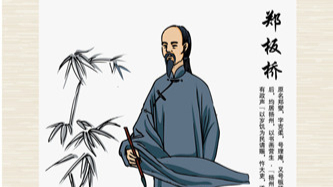
Zheng Banqiao
Introduction
Zheng Banqiao (1693–1765), also known as Zheng Xie, was a renowned Chinese painter, calligrapher, poet, and official of the Qing Dynasty (1644–1911). Born in Xinghua, Jiangsu province, Zheng Banqiao is celebrated as one of the "Eight Eccentric Artists of Yangzhou," a group of unconventional and innovative artists who flourished during the Qing Dynasty. His artistic works, which prominently feature bamboo, orchids, pines, and chrysanthemums, reflect his unique style and philosophical outlook. Zheng Banqiao’s contributions to literature, painting, and calligraphy have left an indelible mark on Chinese culture, and his philosophy of empathy and care for the common people continues to resonate in modern times.
Early Life and Education
Zheng Banqiao was born in 1693 in Xinghua, Jiangsu province, during the Qing Dynasty. His early life was marked by a strong dedication to education and the pursuit of knowledge. Zheng spent much of his youth studying Chinese classical literature, poetry, and philosophy, which laid the foundation for his later artistic and literary achievements. He was deeply influenced by Confucian ideals and the traditions of Chinese literati, which emphasized moral integrity, self-cultivation, and a commitment to serving society.
Zheng Banqiao’s determination to succeed in the imperial examination system was evident in his early years. He spent over four decades striving to pass the rigorous exams required to enter officialdom. His perseverance paid off when he eventually achieved success and became a magistrate in Shandong province. However, his experiences as an official would later shape his artistic and philosophical outlook, as he witnessed the hardships faced by ordinary people and sought to alleviate their suffering.
Career and Achievements
Literary Works
Zheng Banqiao was a prolific poet and writer, known for his ability to convey profound philosophical ideas and human emotions through concise and evocative language. His literary works often reflect his empathy for the common people and his disdain for corruption and injustice. One of his most famous poems, written during his tenure as a magistrate in Weixian county, expresses his concern for the welfare of the people: "We may be modest as small county officials, but we are concerned for every leaf on every branch." This poem encapsulates his belief that government officials should genuinely care for the well-being of the populace.
Zheng Banqiao’s literary legacy includes the "Banqiao Collection," a compilation of his poems, essays, and calligraphy. His works are characterized by their simplicity, sincerity, and philosophical depth, earning him widespread admiration among scholars and the public alike.
Painting and Calligraphy
As one of the "Eight Eccentric Artists of Yangzhou," Zheng Banqiao was celebrated for his innovative approach to painting and calligraphy. His artistic style was characterized by boldness, spontaneity, and a departure from traditional conventions. Zheng’s paintings often featured bamboo, orchids, pines, and chrysanthemums, which he used as metaphors for moral integrity, resilience, and self-renewal.
Zheng Banqiao’s bamboo paintings are particularly renowned for their expressive brushwork and symbolic significance. In Chinese culture, bamboo represents strength, flexibility, and uprightness, qualities that Zheng admired and sought to embody in his own life. His calligraphy, known for its dynamic and unconventional style, further exemplifies his artistic individuality and philosophical outlook.
One of Zheng Banqiao’s notable works, "Excerpt of Huaisu’s Autobiographical Essay," is considered a national treasure and has been displayed in prestigious institutions such as the Yangzhou Museum, Taipei Palace Museum, and Tokyo National Museum. This piece reflects his mastery of calligraphy and his ability to infuse artistic expression with profound meaning.
Philosophy and Influence
Zheng Banqiao’s philosophy was deeply rooted in Confucian ideals and the traditions of Chinese literati. He believed in the importance of moral integrity, empathy, and self-cultivation, and he sought to apply these principles in both his official duties and artistic endeavors. His concern for the welfare of the common people is evident in his poetry and his actions as a magistrate, where he worked tirelessly to help residents survive natural disasters such as floods and locust plagues.
Zheng Banqiao’s philosophy also extended to his artistic works, where he used natural elements such as bamboo and orchids to symbolize resilience, humility, and inner strength. His famous calligraphy piece "Nande Hutu" ("It’s Difficult to Be Muddled") reflects his belief in the value of simplicity and the art of embracing life’s imperfections.
Zheng’s influence can be seen in the enduring popularity of his works and the continued relevance of his ideas in contemporary Chinese society. His philosophy of empathy and care for the people has inspired generations of scholars, artists, and officials.
Legacy
Zheng Banqiao’s legacy as a poet, painter, calligrapher, and philosopher remains deeply ingrained in Chinese culture. His works have been celebrated for their artistic excellence, philosophical depth, and humanitarian spirit. As one of the "Eight Eccentric Artists of Yangzhou," Zheng played a pivotal role in shaping the artistic and intellectual landscape of the Qing Dynasty.
Zheng Banqiao’s contributions to literature, painting, and calligraphy continue to be studied and admired by scholars and art enthusiasts worldwide. His works are preserved in museums and collections, serving as a testament to his enduring influence and artistic genius. Moreover, his philosophy of empathy, integrity, and care for the common people has left a lasting impact on Chinese society, inspiring individuals to prioritize the welfare of others and embrace the values of compassion and humility.
In summary, Zheng Banqiao’s life and works exemplify the ideals of the Chinese literati, blending artistic innovation with philosophical insight and a commitment to serving humanity. His legacy as a cultural icon and moral exemplar continues to resonate in modern times, reminding us of the timeless value of empathy, integrity, and artistic expression.








